
Removals · Guide
Moving house checklist: what to do and when
Moving house comes with a long list of jobs, and it is easy to forget something along the way. This checklist puts everything in a sensible order, with a printable version you can tick off as you go. If you have less than eight weeks, skip the jobs you have already done and pick up from there.

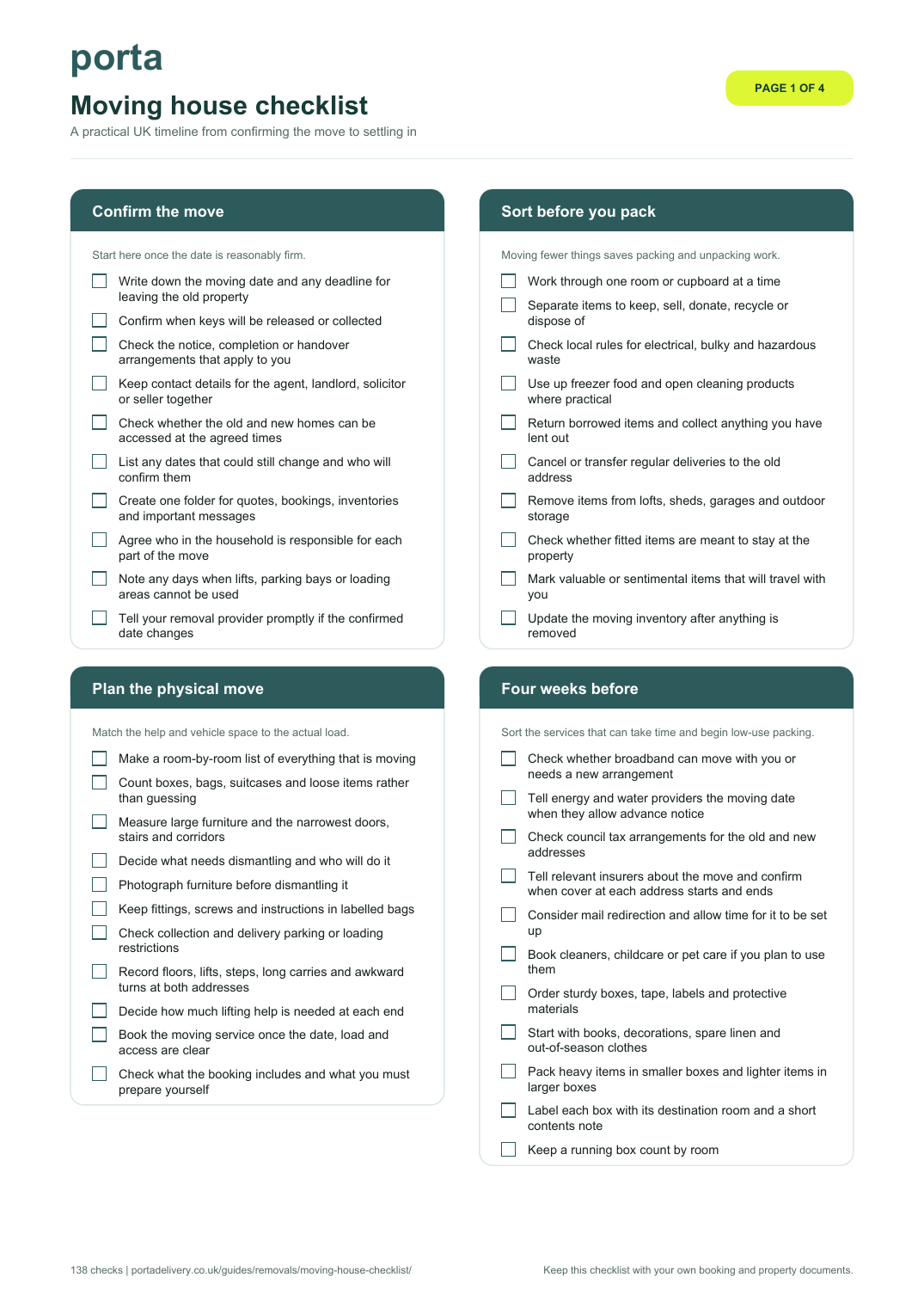 PDF
PDF Free printable checklist
Open or download the complete moving house checklist
The printable version has 138 tick-box checks covering planning, packing, address changes, moving day and the first week in your new home. It is separate from the article, so you can print it on its own.
- Planning
- Packing
- Address changes
- Moving day
- First week
Four A4 pages. Open it in a new tab to print it, or download a copy to keep with your moving paperwork.
When should you start a moving house checklist?
Six to eight weeks is a comfortable starting point, but a confirmed date matters more than the number on a calendar. If you are buying, the point at which the date becomes binding varies across the UK, so follow your solicitor or conveyancer's advice before making non-refundable arrangements. If you are renting, your notice period and key handover may set the pace. Write down what is confirmed, what is not and who needs to tell you.
Start with jobs that depend on someone else. Booking help, arranging parking and changing broadband can rely on availability. Labelling boxes does not. When time is tight, do the jobs that need an answer from another person first.
01
Six to eight weeks before: decide what is moving
- Confirm the likely date, key arrangements and the deadline for leaving.
- Walk through every room, loft, shed and cupboard to make the inventory.
- Measure large furniture, doors, stairs and awkward turns.
- Check parking, lifts, loading bays and carrying distances at both homes.
- Book the help you need once the load and access are clear.
02
Four weeks before: sort services and start packing
- Check what is happening with energy, water, council tax, broadband and insurance.
- Arrange mail redirection if you want it, allowing time for the request to be processed.
- Start with books, decorations, spare linen and anything else you can live without.
- Label boxes with the destination room and keep a running count.
- Sell, donate, recycle or dispose of anything that is not coming with you.

03
Two weeks before: confirm addresses, access and help
- Recheck both full addresses, access times and who will be at each property.
- Update the inventory if you have bought, sold or removed anything.
- Arrange any parking permission, lift booking or building access you need.
- Decide how pets, plants, valuables and important documents will travel.
- Tell the moving provider about changes before the day itself.
04
The final week: finish packing without boxing yourself in
- Keep only everyday clothes, toiletries and a small kitchen set in use.
- Back up computers and photograph cable layouts before unplugging them.
- Prepare appliances according to their own moving instructions.
- Check every box is closed, labelled and safe to lift.
- Put keys, paperwork and first-night essentials somewhere they cannot be packed by mistake.
What should you keep out for moving day?
Split the things you need into two groups. Your personal bag stays with you. The household essentials box is the first box you open at the new address. Mark it clearly and keep both away from the main pile.
Keep with you
Keys, ID, property and booking documents, medication, valuables, phone, chargers, water and anything needed for children or pets during the journey.
Open first
Toilet roll, soap, hand towel, drinks, mugs, a simple meal, bin bags, cleaning cloths, basic tools, bedding and clothes for the first night.
Moving day: leaving the old home
Check rooms as they are cleared instead of waiting for one final sweep. Include cupboards, the loft, shed, garage and outdoor areas. Before you lock up, photograph final meter readings where the meters are accessible, check taps and that appliances being left are switched off and taps are closed where the handover requires it, secure the windows and hand over every required key.
Keep children and pets away from carrying routes, and keep the new-address access details to hand. If you are still estimating the schedule, the guide to how long moving day takes breaks down loading, travel, keys and unloading.
Moving day: arriving at the new home
Open the entrances and check the unloading route before the vehicle is emptied. Send labelled boxes straight to their rooms, but test that large furniture will fit before carrying it deep into the property. Record opening meter readings and any existing condition issues, then find the stopcock, consumer unit and meters. Check for urgent leaks or security problems and test the smoke and carbon monoxide alarms that apply to the property.
Make the beds first. After that, unpack the bathroom and enough of the kitchen to get through the evening. A complete living room can wait; somewhere to sleep cannot.

Who should you tell when you move house?
There is no single list that applies to every household. Work through the categories below and use each organisation's official process. Some changes can be arranged before the move; others need the new address, an opening meter reading or an account reference after you arrive.
| Category | Common examples | Useful timing |
|---|---|---|
| Utilities and council tax | Energy, water and the local council | Follow each moving process and submit readings where relevant |
| Finance and insurance | Banks, lenders, cards, pensions and relevant insurers | Update the address and applicable dates through each provider's process |
| Government records | HMRC, benefits, electoral register and relevant DVLA records | Update through the official service once the change applies |
| Work and health | Employer, pension provider, GP, dentist, optician, school or childcare | Tell them early if the move changes access to the service |
| Post and accounts | Mail redirection, subscriptions, mobile provider, deliveries, friends and family | Set up what you can before leaving, then catch anything you missed |
MoneyHelper has a fuller UK change-of-address checklist. Drivers should also check the DVLA change-of-address steps, because a driving licence, vehicle log book and vehicle-tax Direct Debit are separate records. You can update your address on the electoral register through GOV.UK.
What should you finish in the first week?
Submit opening readings, finish council tax and utility arrangements, and complete any address changes that needed the new account details. Check insurance documents show the right property and date. As you unpack, flatten boxes for reuse or recycling, but keep receipts, photographs and moving paperwork until any questions have been settled.
How can Porta arrange the physical move?
Porta is a booking platform that connects customers with vetted independent drivers and moving partners. Start with the Removal Services page, choose the service that matches the size of the move, then provide both addresses, a complete inventory, access details and the lifting help required.
Suitable smaller moves show a fixed price before booking. A fuller household move may need a custom quote instead. If you are comparing the likely cost of a compact property, the one-bedroom flat removal cost guide explains why the load, stairs, parking and help can matter as much as the bedroom count.