
Removals · Guide
How to pack moving boxes
It’s easy to remember what’s in a box while you’re packing it. A week later, when you need the saucepan or spare bedding, a clear label is much more useful. A little care with the base, contents and label makes each box easier to handle and unpack.
Before you fill the first box
Put your packing tape, scissors, wrapping, cushioning and marker within reach. Use a clean, dry box with sound corners and complete flaps. If it has been used before, remove or cover old labels so there is no doubt about where it belongs this time.
Choose the box for what you’re putting inside. Books and files soon make a large box heavy; pillows and bedding take up more space without adding the same weight. Leave enough room around fragile belongings for protection.
If you still need supplies, our moving-box buying guide compares sizes, strength and places to get them.
For cushioning choices and suppliers, see where to buy bubble wrap for moving.
How to pack a moving box, step by step
Work through one box at a time. It’s easier to check the packing and record the contents while everything is still in front of you.
-
Fold and seal the base
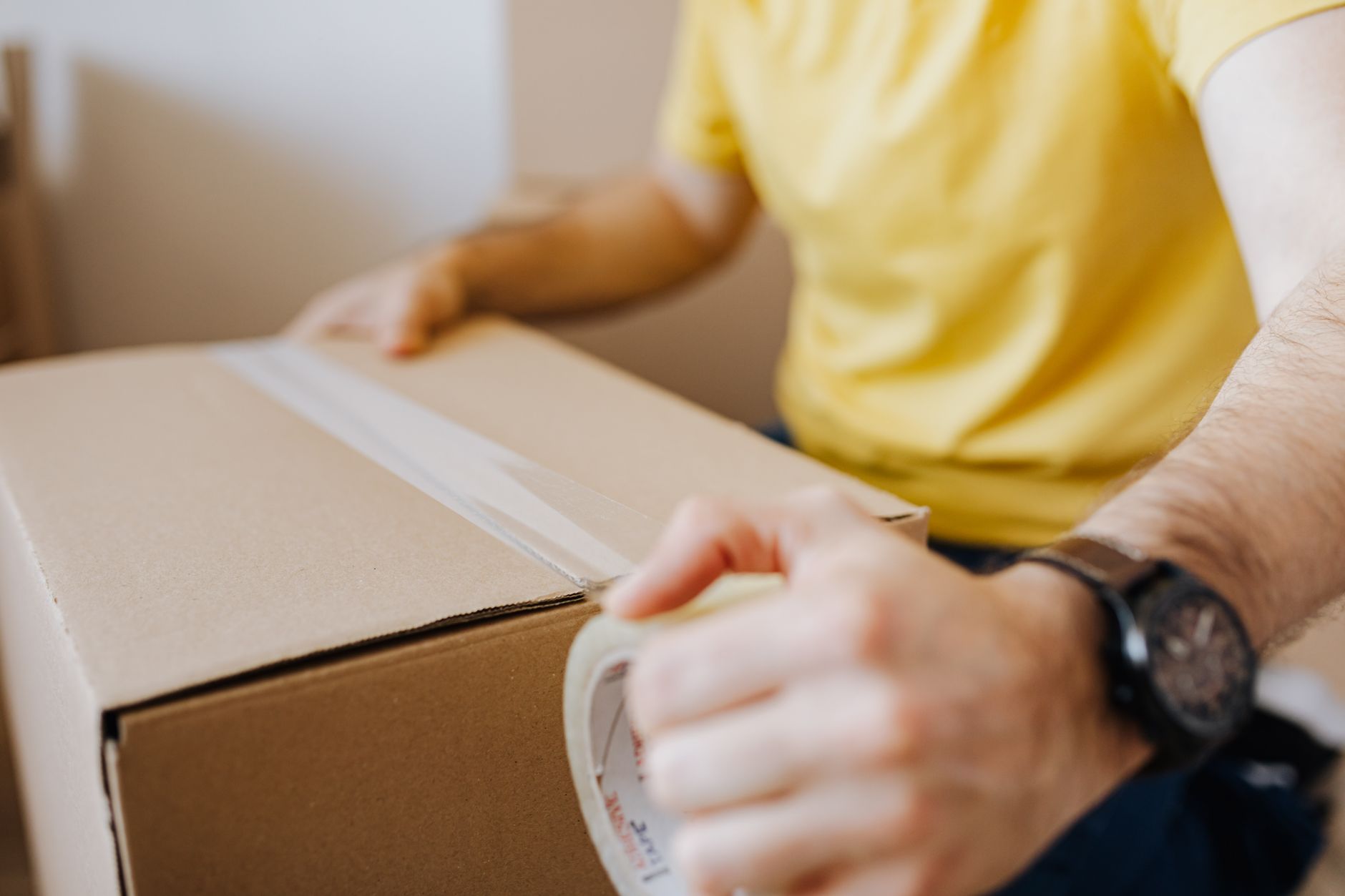
For a standard four-flap box, open the box into its square shape and turn it upside down. Fold the shorter base flaps in first, followed by the longer ones. Their edges should meet neatly along the centre.
Run packing tape along that centre join, extending it over the edges onto the sides. Add a strip across each end seam to make an H shape. Press all three strips firmly onto the cardboard, then turn the box upright. Follow any assembly instructions supplied with a different type of box.
The three tape strips form an H when viewed from above. Extend the tape around the edges onto the sides. The pattern follows RAJAPACK’s box-sealing guidance. Use tape suited to the box and load, and follow its application instructions. More tape cannot repair weakened cardboard or make an overloaded box manageable.
-
Cushion the bottom and separate fragile items
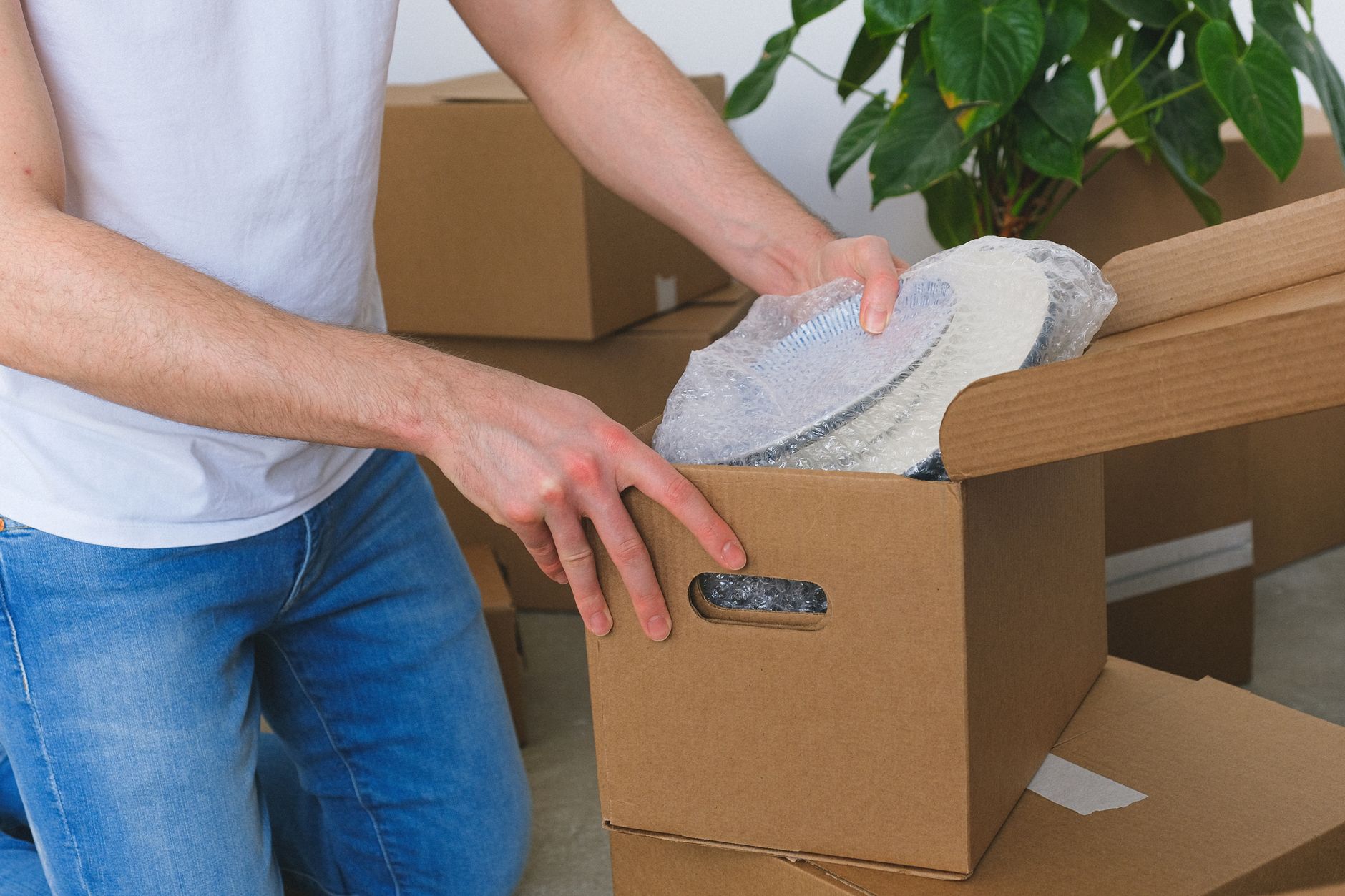
For breakable contents, put suitable cushioning in the base before adding anything. Wrap each fragile item separately, protecting its corners and edges as well as the main surface. Leave protection between items and between the contents and box walls.
Keep fragile pieces apart rather than relying on a “Fragile” label to protect them.
-
Arrange the contents without overloading
Put sturdy, heavier contents low down, spread evenly across the base, with lighter belongings above where suitable. Don’t place a heavy item on top of something delicate. Fragile belongings are better packed separately from books, tools and other dense contents.
Keep checking the load as you pack. If it is becoming heavy or awkward, split the contents between smaller boxes. An empty corner is not a reason to add another heavy item.
-
Fill gaps and check the top closes
Add crumpled packing paper or other suitable lightweight cushioning around the contents so they cannot move freely. Fill the space without compressing delicate pieces. Please don’t shake a box of breakables to test your packing.
Fold the top flaps down before taping. They should lie flat without bulging or needing to be forced shut. If the box is only partly filled, check whether a smaller one would fit the protected contents better.
-
Seal the top and add the label
Use the same H-shaped tape pattern on the top as on the base, pressing each strip down firmly. Write the destination room, a short description of the contents and a box number straight away, before moving on to the next box.
Add handling notes where needed, such as “Fragile” or “Keep upright”. Put the main label on the top and at least one side so you can read it when boxes are stacked.
How heavy should moving boxes be?
There isn’t one weight that is suitable for every person, box and carry route. The box’s stated capacity tells you about the packaging; it does not tell you what someone can safely carry upstairs or along a narrow hallway.
Use the box supplier’s capacity as a limit, not a target. Keep dense contents in smaller boxes and make each load manageable for the people handling it. If you have an unusually heavy item that cannot be split, tell your moving partner about it before collection.
HSE’s manual-handling guidance explains that its guideline weights are not safe limits. Weight matters alongside the size, grip, person and task, so a blanket “all boxes must weigh under this amount” rule would be misleading.
How to label moving boxes
Label for the room in your new home, rather than the cupboard the contents came from. “Kitchen, everyday mugs” is more useful than “Cupboard two”. If several people are packing, agree the room names first so everyone uses the same system.
Box 07 · Everyday mugs
FRAGILE · KEEP UPRIGHTKeep a matching note
On your phone or a sheet you keep with you, record “07: kitchen, everyday mugs”. Use a different number for each box. It gives you a way to find a particular box without opening several.
Write clearly on the top and a side, or use labels that stay attached. If you like colour coding, use one colour per room alongside the words. Keep the text too, so nobody has to guess what a colour means.
A final check before collection
Set finished boxes aside somewhere dry, with the labels visible and the walkways clear. Keep your daily essentials separate so you don’t have to reopen a ready box for your keys or medicines.
For a flat, room or smaller household load, Small Removals lets you get a fixed quote for the boxes, furniture and carrying help you need. A full household move goes through House Removals for a custom quote. Please include anything unusually heavy or awkward when arranging the move.
If you’re moving to or from university, the student moving checklist covers accommodation checks and the things to keep with you. For the wider household jobs, use the moving house checklist.
For folded clothes, shoes and hanging garments, see how to pack clothes for moving before deciding what goes in each box.
Our kitchen-packing guide shows how to protect plates, glassware, cookware and sharp utensils.
Need to work out when to do the packing? Our packing timeline helps you plan it around the belongings you still use.