
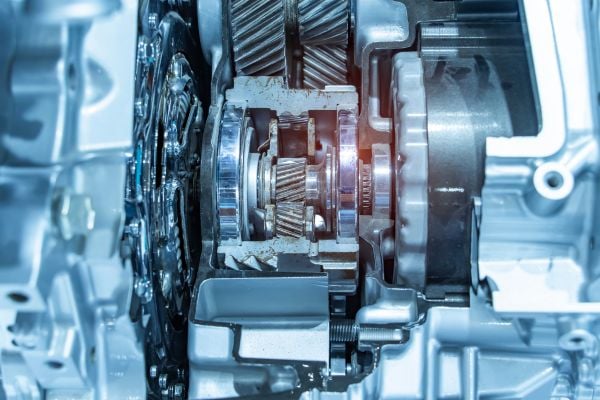

You need a gearbox. Your existing one has finally thrown in the towel, you're upgrading to a nicer one, or you've finally found the exact same five-speed manual you've been searching for since February on eBay. Whatever the reason, the fact is that you have a gearbox that needs collecting from somewhere and then delivering to you.
Simple enough, right? It's just a gearbox. How hard can it be?
Turns out, quite hard actually. Because gearboxes are weird things to transport. They're deceptively heavy, awkwardly shaped, full of residual oil that'll leak everywhere given half a chance, and contain precision-machined components that really don't appreciate being dropped or knocked about.
So before you click "Buy It Now" or agree to collect that gearbox from someone's garage 150 miles away, here's what actually needs to happen to get it from there to here in one piece.
Need a Gearbox Collected?
Professional gearbox collection and delivery across the UK. Proper equipment, full insurance, and expert handling for your transmission.
Get Your Quote TodayWhy Gearbox Collection Isn't as Straightforward as It Looks
Walk past a gearbox sitting on someone's workshop floor and it doesn't look that intimidating. It's just… there. A lump of metal and gears. Smaller than an engine block. Manageable, surely?
Then you try to pick it up. And you immediately understand why mechanics have trolley jacks and engine stands and quite strong opinions about lifting technique.
A manual gearbox for a regular car typically weighs between 30kg and 60kg depending on what it came from. Doesn't sound too terrible until you remember it's not a nice convenient 30kg – it's an awkwardly shaped 30kg with no good handholds and a tendency to be covered in oil residue that makes gripping it even more challenging.
Automatic gearboxes? Those are genuinely heavy. We're talking 80kg to 130kg for most car applications. That's two people minimum, and ideally two people who actually know what they're doing rather than two mates who agreed to help you and are now seriously regretting that decision.
Then there's the shape. Gearboxes aren't neat rectangular boxes. They've got the bellhousing sticking out one end, the output shaft poking out the other, maybe a transfer case if it's four-wheel drive, selector mechanisms protruding at odd angles – they're just awkward. Getting one through a standard doorway without banging it on the frame requires thought. Getting one up or down stairs? That's a whole different conversation.
The oil issue is real too. Even if someone's drained their gearbox before selling it, there's always residual fluid inside. Always. It'll be in the galleries, in the gear chambers, pooled around the bearings – and the moment you tip that gearbox at the wrong angle during transit, it's coming out. Over your van floor, over your clothes, possibly over you if you're particularly unlucky.
This is why proper car parts courier services use absorbent materials and know how to package automotive components correctly. It's not being precious, it's being practical.
Where People Actually Get Gearboxes From
The most common source these days is the secondhand market. Facebook Marketplace and eBay are absolutely full of gearboxes. Some are from breakers who've scrapped a vehicle and are selling the parts individually. Some are from people who've upgraded to something better and are selling the original. Some are from failed project cars where someone bought everything they needed and then gave up halfway through.
Classic car gearboxes tend to come from specialist suppliers or other enthusiasts. You'll find them advertised on model-specific forums, at autojumbles, through clubs, or occasionally at auctions. These aren't the sort of thing that turn up at your local scrapyard very often.
Performance gearboxes – the upgraded five-speeds, the close-ratio boxes, the limited-slip diffs – those usually come from specialist retailers or from people selling their modified cars back to standard before they trade them in. You'll pay more, but you're getting something that's been specifically chosen for what you're trying to do.
Then there's breakers yards and salvage specialists. If you just need a working replacement gearbox for a common car, these are often your best bet. They'll have tested it, they'll offer some kind of warranty, and they're set up for business properly with proper access and loading equipment.
The challenge with any of these sources is the same: the gearbox is over there, you're over here, and somehow it needs to make that journey without being damaged, dropped, or having all its oil leak out in someone's van.
"I'll Just Collect It Myself" Temptation
Let's imagine that you've found a gearbox for sale on Facebook Marketplace. It's a bargain, at £400. That's half of what the garage quoted you for a refurbished one from their stock. The seller's 90 miles away, so you'll just hire a van for the day, drive up, collect it and drive home. 90-minute job on a Saturday morning.
No.
Saturday morning plays out like this: You go to pick up the hire van. It's £80 for the day plus fuel. The seller texts to say they've got the gearbox ready but it's in their garage which has quite a narrow doorway and a step down. When you turn up, "quite narrow" turns out to mean that you and the seller are performing an elaborate two-person dance trying to manoeuvre a 50kg gearbox through a gap which is only just wider than the bellhousing.
It eventually goes, but not before you scrape your knuckles on the doorframe and get oil on your jeans. The gearbox is now in the back of the van, not particularly well secured because you didn't really think about how you'd actually restrain a lump of metal that's basically a cube with bits sticking out.
The journey home is spent worrying every time you brake or corner that it's going to slide around. It does slide around, quite a lot in fact. You can actually hear it moving. By the time you get home there's a pool of gearbox oil on the floor of the van and the gearbox has rotated 90 degrees from how you loaded it.
Finally getting it out of the van and into your garage requires you to enlist the aid of your neighbour because you've finally accepted that you can't do this alone. Your neighbour isn't best pleased, particularly when they get oil on their shoes.
The True Cost of DIY Collection
Total cost: £80 van hire, £30 fuel, several hours of your time, scraped knuckles, oil-stained clothes, slight back ache, two pints with the neighbour to apologise and apologise for bothering them, and a lingering sense that you may have damaged something that you don't yet know about when the gearbox was sliding around in the back.
Then, of course, you have to bring the bloody thing into the house to store it.
It's entirely possible that if you'd used a specialist car parts delivery service, they'd have collected it with the right equipment, secured it correctly, and delivered it to your door. Total drama: zero. Total neighbourly goodwill expended: none. Total risk of back injury: minimal.
Sometimes DIY isn't actually saving you anything.
What Professional Gearbox Collection Actually Involves
When a courier who knows what they're doing collects a gearbox, it's not a case of turning up with a van and hoping for the best.
First, they'll confirm the weight and type before they even quote. Manual or auto, makes a difference. Front-wheel-drive or rear-wheel-drive gearbox affects the shape of the box. If it's still in a vehicle, that's a different job entirely – that's a breaking service, not a collection service.
They'll ask about access. Ground floor garage? First floor workshop? Down steps? These things matter because they determine what equipment's needed. A gearbox for a small car from a ground floor garage is a simple job. An automatic box for a Land Rover from a first floor lockup is considerably less straightforward.
They'll bring the right handling equipment. That might be a trolley jack, it might be an engine crane, it might be lifting straps – whatever's appropriate for the weight and the situation. What it won't be is them and their mate trying to muscle it around by hand.
Packaging matters too. The gearbox gets wrapped to contain any residual oil. It gets secured so it can't move during transit. It gets oriented properly so that seals aren't under pressure and oil isn't pooling where it shouldn't be. This is basic professional practice but it makes all the difference between a gearbox that arrives in the same condition it left and one that's leaked its remaining fluid and potentially suffered impact damage.
If you're collecting from a marketplace seller who doesn't have business premises, a professional courier knows how to handle that situation. They'll communicate properly, they'll confirm the address clearly, they'll turn up in a professional vehicle that reassures the seller this is legitimate. Private sellers can be nervous about this sort of thing – they're inviting someone to their home, after all – so looking and acting professional matters.
The delivery's the same process in reverse. Confirmed timing, proper equipment, careful handling, placed exactly where you want it. If you're not there, they're not leaving a 60kg gearbox on your doorstep hoping for the best.
This is what you're actually paying for with a proper courier service – expertise, equipment, insurance, and the removal of about seventeen different ways the collection process could go wrong.
Professional Gearbox Transport
Experienced couriers with the right equipment for safe gearbox collection and delivery nationwide.
Request a QuoteBox Collection from Varied Sources
The logistics vary significantly based on the gearbox's origin.
eBay and Facebook Marketplace vendors present the most diversity. Some are seasoned enthusiasts with the gearbox prepped, drained, and stored on a pallet in an accessible area. Others might be individuals who acquired a project car, removed the gearbox, and it's now in a corner of their garage, surrounded by other car parts and maybe a lawnmower. When organizing collection from a private residence, utilizing a marketplace collection service is logical – they're accustomed to private sellers and understand how to make the process seamless for both parties.
Breakers yards and salvage specialists are typically well-equipped for this. They'll have the gearbox ready, loading gear available, clear access, and are accustomed to commercial collection. This is the simplest scenario for any courier. Ensure you've paid the breaker and obtained your receipt prior to collection.
Specialist suppliers and rebuilders operate similarly professionally. They'll have packaged the gearbox correctly, it'll be ready for collection at an agreed time, and there won't be any surprises. If you're purchasing a rebuilt performance gearbox from a specialist, they'll likely recommend couriers they trust.
Auctions and autojumbles create unique challenges. Collection times are often restricted to specific windows. Payment must be completed, and your lot number sorted before collection. Dozens of other people may be attempting to collect simultaneously. Employing a courier familiar with automotive events simplifies this significantly compared to DIY methods.
Private collections from classic car enthusiasts often involve elderly sellers who've stored the gearbox for years "just in case" and now are downsizing. These scenarios require sensitivity and patience. The gearbox might be in a shed, in a loft, or wrapped in newspaper from 1987 – each situation is unique. A competent courier will manage these tactfully instead of arriving and demanding everything be ready immediately.
The source is relevant because it influences access, timing, packaging, and the necessary communication type. Approaching every collection identically is a recipe for issues.
The Weight and Size Reality Check
Let's discuss specifics regarding weight, as "it's just a gearbox" is vague:
Gearbox Weights by Type
Manual gearbox from a small car (think Ford Fiesta, Vauxhall Corsa) typically weighs 30-40kg. Manageable for two people with proper lifting techniques, but awkward, and you wouldn't want to carry it far.
Manual gearbox from a larger vehicle or a light commercial vehicle tends to be 50-60kg. This enters "genuinely heavy" territory. Two people minimum, and ideally with lifting equipment instead of raw strength.
Automatic gearbox from a standard family car generally weighs 80-100kg. This isn't something you're transporting anywhere. You're wheeling it on a trolley or using lifting gear. That's simply reality.
Automatic gearboxes from bigger vehicles – SUVs, 4x4s, vans – can reach 120kg or more. Factor in a transfer case, and you might be looking at 150kg. This is significant weight requiring substantial handling equipment.
Classic car gearboxes vary dramatically. The nice four-speed manual from a 1960s sports car might be only 25kg. That automatic from a 1970s American muscle car could be 140kg. Don't base assumptions on the vehicle's age.
Dimensions are crucial too. A gearbox isn't huge, but it's not compact either. Expect something around 60-70cm long, 40-50cm wide, and perhaps 30-40cm high, depending on the type. The bellhousing increases that length significantly. It'll fit in a car boot if you're fortunate and it's a large boot, but it'll be tight and you definitely can't have multiple gearboxes there with anything else.
In a van, one gearbox isn't an issue. Half a dozen gearboxes from a breaker's yard would become problematic because the weight accumulates quickly, and you need to secure them individually.
This is why courier quotes require specifics. "A gearbox" could be 30kg or 130kg. The difference between one person with a trolley and two people with lifting equipment. The quote must reflect reality, not assumptions.
Insurance and If Things Go Wrong
Gearboxes are costly. Even a used one for a common car could be valued at £400-600. A rebuilt performance gearbox might be £2,000. A rare gearbox for a classic car could be £3,000 or more if you've spent months searching.
If you transport it yourself and something goes wrong, you're on your own. Your car insurance won't cover cargo like that. The van hire company's insurance certainly won't cover mechanical parts you're carrying. If you drop it, if it slides around and gets damaged, if someone crashes into your van – you're footing the bill.
Professional courier services possess goods-in-transit insurance designed precisely for this. If something occurs during collection, transit, or delivery, there's coverage. The precise level differs by courier and you should always verify, but it exists and is meant for such scenarios.
That insurance is part of the service you're paying for. It's the difference between "I hope nothing goes wrong" and "if something does, there's a process to address it."
The most common actual issues aren't dramatic crashes. They're issues like:
- Oil leakage that could have been avoided with better packaging
- Scrapes and scratches from poor handling during loading
- Damage to protruding parts (gear selectors, mounting brackets) that weren't safeguarded
- Internal damage from excessive movement during transit
All avoidable with proper professional handling. But if they do occur despite best efforts, insurance exists to rectify it.
Certain couriers offer declared value cover, where you declare what the gearbox is worth, and they insure it accordingly. It costs a bit more but is sensible for expensive or irreplaceable items. That 1960s Jaguar gearbox you've been searching for? Declare its value correctly and insure it properly.
Gearbox Collection 101: Booking, Costs, and Doing It Yourself
Booking: When You Need It and When You'll Get It
First things first. If you absolutely need the gearbox tomorrow or even today then say so. There are same-day and next-day collection services specifically for when you're in that kind of situation. It will cost more but that's the point – the courier's cancelling all their other jobs to come collect yours at your level of urgency.
In the majority of cases though the gearbox collection is not mission critical. You're in the middle of a restoration project that's stretching over months. You're upgrading a spare car and you've got the time. You bought the gearbox because it was a bargain price, not because you need it in the next 24 hours.
Standard collection will generally work on a few days' notice. The courier will book a collection slot with the seller, come collect it when everyone's available, and drop it at your door within a day or two. This is the standard level of service and it suits most circumstances.
If you're collecting from an auction or other time-limited sale then you do need to book your collection in advance as those collection slots are fixed. If you miss it then you're incurring storage fees or you lose the lot.
If you're having it delivered to a business address then make sure someone will be there to accept it and somewhere to put it. Couriers won't leave a 60kg gearbox with the receptionist and hope for the best. Equally, if you're having it delivered to home then you need to either be there or arrange for it to be left in a garage or some other safe place.
Economy services are where the courier combines your collection with others going the same direction. It takes longer but it's cheaper. If time is not of the essence it's worth considering.
The main thing is to be realistic about your actual timescales. Don't pay for next-day service when you don't actually need it that quickly. But equally don't book economy and then be annoyed when it takes a week and you actually needed it sooner.
Costs: What Gearbox Collection Actually Costs (And Why)
Gearbox collection prices will vary depending on how far, how much, how easy it is to access, and how quickly it needs to happen. As a result there is no standard price for gearbox collection – no two collections are the same.
Typical Pricing Guide
As a very rough rule of thumb collecting a gearbox 50-100 miles away could cost you £100-180 depending on the details. That'll be standard service, normal access, regular gearbox weight. If it's a heavier unit, if access is more difficult, if you need it same-day then the price goes up accordingly.
Long distances will cost more. Collecting from Scotland to London is not the same as collecting from the next county over. But it may still be worth it if it's a rare part that you would struggle to find elsewhere.
Short distances – in the same city, for example – can often feel disproportionately expensive for the mileage involved. But remember, you're not just paying for miles travelled. You're paying for the courier's time, the equipment, the insurance, the expertise. There's a minimum price below which it won't make any economic sense for the courier to do it.
Collecting multiple items works out cheaper per item. Collecting a gearbox and an engine from the same seller is one collection visit not two. The price won't double it'll go up but not proportionally. The same is true of collecting gearboxes for multiple projects from the same breaker's yard – the efficiency savings are passed on to the customer.
Couriers may charge by weight, or by dimensions, or by declared value. There is no universal pricing structure. What matters is that the quote you get is based on what's actually being collected. Don't low-ball the weight to save money – you'll just cause the courier trouble when they arrive and find they've brought inadequate lifting equipment.
Compare this to DIY: van hire, fuel, time, risk of damage, risk of injury, hassle of arranging help at both ends. Add it all up and professional collection is often comparable or cheaper. And even when it's a bit more, the reduction in stress and risk is usually worth it.
DIY Collection: If You're Absolutely Determined to Do It Yourself
Some people still will want to collect their gearbox themselves despite the above. That's fine. Here's how to do it safely without causing yourself unnecessary problems.
Essential DIY Equipment: An engine crane or trolley jack, heavy duty straps, absorbent material for oil, blankets or cardboard for protection, ratchet straps for securing during transit.
Book a van that's actually big enough with proper load space. A car estate probably isn't going to be up to the job unless it's a very small gearbox. A van hire with a tail lift will make loading and unloading dramatically easier if that's an option.
Take someone with you who is actually capable of lifting. "Capable of lifting" means they've got some level of fitness and they understand proper lifting technique. Your friend who has a bad back but has agreed to help anyway? Don't do it. That's a disaster waiting to happen.
Bring proper equipment. At a minimum: an engine crane or trolley jack if you've got access to one, heavy duty straps, absorbent material to soak up oil, blankets or cardboard to protect both the gearbox and the van, ratchet straps to secure it properly for transit.
Drain any remaining oil before transport if possible. Even if the seller has said it's drained, tip it up carefully over a drain pan and see what else comes out. It will.
Wrap the gearbox to contain residual oil. Cling film, bin bags, anything that creates a barrier between the oil and everything else. Put absorbent material underneath it in the van.
Secure it properly for transit. The gearbox is not allowed to be rolling around loose in the back of the van. Strap it down, pack it in place, make sure it's not going anywhere come hell or high water regardless of how hard you brake or how sharp you corner.
Drive carefully. You have a substantial amount of weight in the back that might not be 100% secure despite your best efforts. Don't drive as you normally would.
Have a plan for unloading at the other end. If you need help, arrange for help before you set off. If you need equipment, make sure you have that waiting for you.
Check your back when you get home. Properly. People do themselves proper injuries trying to manhandle gearboxes that turn out to be heavier than they expected. If you feel a twinge, stop immediately. Do not push through it.
All of the above is absolutely doable but it's effort. It's time. It's planning. It's risk. And at the end of it you've saved maybe £100 compared to using a professional courier service and assuming that nothing went wrong during the process. That's for you to decide whether it's worth it or not.
Skip the Hassle
Let the professionals handle your gearbox collection. Proper equipment, insurance, and peace of mind included.
Get StartedGearbox Types and Collection Issues
Manual gearboxes are easy to explain. They are heavy, but not impossible to manage. They are tough in handling terms unless you are dropping them or bashing exposed shafts. Weight, oil containment and bundling of any loose parts (selector mechanisms, clutch release bearings, whatever else is attached) are your main considerations.
Automatic gearboxes are heavier and arguably more fragile internally. The valve body and clutch packs do not like being dropped or jarred. The torque converter may or may not be attached (if so, that's more weight and another exposed part that must be protected). Automatics have more residual fluid than manuals, so the oil containment issue is more relevant.
Sequential gearboxes from performance or motorsport sources are often expensive and irreplaceable. Treat these with great care. They are precision equipment built to a specification and if damaged may be expensive or impossible to repair or source replacement parts with months on waiting lists. Insurance and careful handling with these are not an optional extra, they are mandatory.
Classic gearboxes are variable. Some are simple, sturdy, over-engineered things that will take pretty much anything. Others are 50 year old units with worn bearings and seals that need a lighter touch. If you are not sure which your unit falls into, err on the side of assuming it is fragile and treat it that way.
Transfer cases and additional components increase weight and handling complexity. A gearbox with transfer case attached may well be 50% heavier than the gearbox alone. It is also a more complex shape to bundle and transport.
Whatever it is, your courier needs to know what it is before they quote. "It's a gearbox" is not enough information. Manual or auto, what make and model it is from, approximate weight, whether anything's attached to it etc. will all affect how they collect it and what equipment they use.
Questions to Ask in Advance
Before you book with any gearbox collection service, check:
What's the insurance level and does it adequately cover the value of your gearbox? If your gearbox is worth £2,000 is it covered at that value?
What happens if there's oil leakage in their vehicle? Are you liable for their cleaning costs or is that considered part of normal business?
Do they have appropriate handling equipment or are they just going to manhandle it? A courier who arrives with a trolley jack and lifting straps is professional. A courier who arrives with the vague idea of just carrying it is a worry.
What's their experience with automotive parts? Someone who moves car parts as a matter of course will know how to handle them. Someone who does house moves might not.
What's the collection window and how much notice do they need if you want to change it? Life happens, sellers cancel, your plans change – all that matters is that the courier is flexible.
Will the same courier who collects also deliver, or does it get transferred to someone else? Direct courier is almost always better for valuable items.
What happens if the seller isn't ready or access is more difficult than expected? Do they charge extra? Do they reschedule? Make sure you know this in advance.
Can they provide references or reviews from other automotive customers? If they're experienced with car parts courier work, they should be able to prove it.
None of this is difficult or unreasonable to ask. Any professional courier should be able to answer all those questions clearly and without complaint. If they can't or they are visibly annoyed that you're asking them, maybe look for another.
Cross-Selling with Engine Collection
If you need a gearbox collected, there's a good chance you might need an engine collected at some point too. Complete drivetrain replacement? Engine might be from one seller, gearbox from another. Build something from scratch, sourcing all the components individually?
The logistics of engine collection are broadly similar to gearbox collection – weight, oil containment, proper handling, bundling and securing for transit etc. If you've found a gearbox collection courier who does it right, they will almost certainly do engine collection just as well. It's the same skill set, same equipment, same experience.
Some people will collect engine and gearbox at the same time if they're from the same seller or the same general area. More efficient, almost always cheaper than two separate collections. But only if the timing is right for both – don't buy an engine just because you're collecting the gearbox if you then end up with the wrong specification or vice versa.
The point is that for most people who are into cars, getting large automotive components collected professionally isn't a one-off thing. You'll need it again. If you find a courier who's good at it, treat them well and they've got someone reliable for when you next need it.
Making the Decision
Collecting a gearbox isn't difficult if you do it in a sensible way. You need to know what you're collecting, where it is, how the access is and how quickly you need it. With that information, you can get accurate quotes and make an informed decision about whether to use a professional courier or do it yourself.
For most people in most cases, using a large item courier who does what they do properly makes sense. It's good value compared to the hassle and risk of DIY. The insurance gives you peace of mind. The professional equipment means the collection will be done correctly.
DIY makes sense in certain circumstances. Very short distances where you genuinely have proper equipment and help available. Collections where you are already going that way for another reason. Jobs where you have very specific requirements the standard courier service won't meet.
But be honest with yourself about whether you are really saving money or just telling yourself you are saving money while taking on unnecessary risk and hassle that isn't actually worth it.
The gearbox you are looking at on eBay might be exactly the one you want at the right price. Collecting it professionally and having it delivered safely means it actually helps your project rather than creating new problems for you. That's what you're paying for – reducing the chances of what should be a simple thing turning into a disaster.
Think it through. Price it properly. Then make the decision that actually works for your situation rather than the decision you think you should make because you feel like you ought to be able to collect it yourself.
Because there's no shame in admitting a 60kg automatic gearbox from 120 miles away probably needs professional collection. That's not being precious, that's being realistic.