
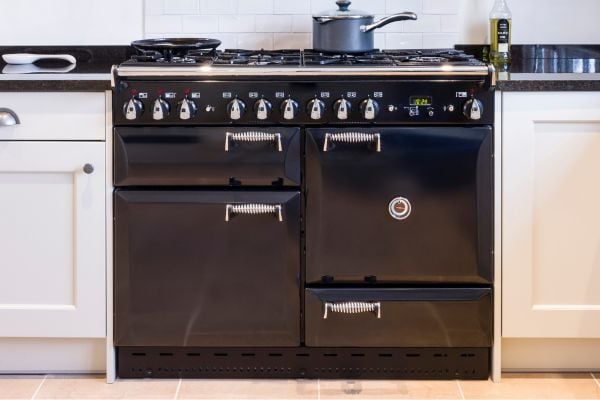

Saw a Rangemaster on Facebook Marketplace last month. Gorgeous thing, cream and chrome, barely three years old. Seller wanted £1,200 for a cooker that cost £3,800 new.
Absolute bargain. Except she lived in Newcastle and I'm in Southampton. And it weighed 180kg. And she'd never disconnected a cooker before in her life.
That's when I started learning the hard way that buying a secondhand range cooker isn't quite as simple as everyone makes out.
The secondhand market for range cookers is massive. Facebook Marketplace, eBay, Gumtree - they're absolutely full of people flogging £2,000 cookers for £800 because they're moving house or upgrading. And why not? These things are built to last decades.
But somewhere between "I'll buy it" and "it's in my kitchen," there's this whole minefield of collection and delivery that nobody really talks about properly. So let's bust some myths.
Myth One: "I Can Just Hire A Van And Move It Myself"
Can you though?
Average range cooker weighs between 100-150kg. That's 90cm models. The 110cm ones? You're looking at 180-200kg. Some of the big cast iron jobs weigh even more.
That's not "two blokes and a bit of muscle" territory. That's "specialised equipment and people who know what they're doing" territory.
I watched someone try to shift a 110cm Rangemaster into a hired Transit once. Three of them. They got it about halfway up the ramp before realising they'd massively underestimated how heavy these things actually are. Dropped it. Smashed the glass in one of the oven doors. That was £250 down the drain before they'd even got it in the van.
Even if you do manage to get it in the van without dropping it, you've then got to secure it properly. These aren't like fridges where you can just wedge them in a corner. Range cookers are top-heavy, they've got bits that stick out, glass that'll crack if you strap it wrong. And if it shifts during transport? You're looking at serious damage to both the cooker and potentially the van.
Van hire for the day: £90. Fuel: £40. Equipment (ramps, straps, blankets): £50 if you don't already have it. Your mate's time: at least buying them lunch and drinks. Risk of damaging a £1,200 cooker because you didn't secure it right: priceless.
Compare that to using proper appliance movers who've got the right equipment and insurance, and suddenly the "save money" argument doesn't look quite so solid.
Myth Two: "The Seller Will Disconnect It For Me"
Oh, this is a good one.
So you've found your dream cooker on Facebook Marketplace. Seller seems sound, price is right, you're ready to collect it. You casually mention "you'll have it disconnected ready for me, yeah?"
Seller: "Oh, erm, I thought you'd be doing that?"
Right. So here's the thing about range cookers and disconnection.
If it's electric, it's hardwired into a 32-amp or 45-amp connection. That's not a plug you can just pull out. That needs disconnecting by someone who knows what they're doing, ideally a qualified electrician, and the power isolating properly.
If it's gas - and a lot of the decent secondhand ones are dual fuel with gas hobs - then legally it MUST be disconnected by a Gas Safe registered engineer. Not "my mate who's good with tools." Not "the seller's husband who reckons he can figure it out." A proper Gas Safe engineer.
Why? Because gas leaks kill people. Simple as that.
Now, here's where it gets interesting for collection. When you're arranging transport, the courier isn't going to disconnect it for you. That's not their job and they're not insured for it. They turn up, cooker needs to be already disconnected, isolated, and ready to move.
If it's not? They're probably going to refuse the collection because the liability's too high. And you've just wasted everyone's time and potentially lost your courier booking.
So before you even think about collection, you need to have this conversation with the seller:
"Will you arrange disconnection by a Gas Safe engineer before I collect?"
If they say no, you're arranging it yourself. And you're paying for it - usually £50-80 for a Gas Safe engineer to come out and disconnect. Some sellers will split this cost with you, most won't.
Factor this into your "bargain" price before you commit to buying.
Myth Three: "It'll Definitely Fit Through My Door"
Will it though?
Standard UK internal doorway: about 762mm wide. A 90cm range cooker is... well, 900mm wide. So that's not going through without some creative manoeuvring.
Most can be tilted and angled through if you know what you're doing. Some can't. The really big 110cm ones? Forget about it unless you've got unusually wide doorways or you're willing to take the door off its hinges and potentially the frame too.
And it's not just the width. It's the height (usually around 900mm but varies), the depth (600-700mm typically), and crucially, whether there are any awkward turns in your hallway or kitchen access.
That Newcastle cooker I mentioned at the start? Seller lived in a flat. Second floor. Narrow Victorian stairwell with a turn halfway up. Even if I'd managed to get it out of her kitchen, getting it down those stairs would've been a nightmare. Probably impossible without specialist equipment.
Bought one locally instead in the end. Still a bargain at £1,400, but more importantly, the seller had ground floor access and the courier could park right outside.
Before you commit to buying any range cooker - particularly when you're looking at Facebook Marketplace or eBay - get the seller to measure the access route. Not just "yeah it'll be fine." Actual measurements of doorways, hallways, any stairs, any tight corners.
Then measure your own access route at the delivery end. Because if it doesn't fit, you've got a very expensive problem.
Myth Four: "Any Courier Can Handle A Range Cooker"
They really can't.
Posted on a local Facebook group once asking for courier recommendations for a range cooker. Got about fifteen replies. Half of them were "my mate Dave's got a van, he'll do it for £50."
Yeah, no thanks Dave.
Range cookers need proper handling. They need people who've moved them before and know about the weight distribution, how to lift them without damaging the control panels, why you don't strap across the door glass, how to navigate awkward doorways.
They need insurance that actually covers the value of what they're transporting. Standard man-and-van insurance often has limits way below what your £2,000 Rangemaster is actually worth.
They need the right equipment - proper moving dollies, good quality straps, blankets for protection, potentially a tail lift for getting it in and out of the van safely.
And crucially, they need to understand that they're not responsible for disconnection. Their job is transport only. The cooker should be disconnected, isolated, and ready to move when they arrive.
When you're comparing quotes for range cooker transport, you're not just comparing prices. You're comparing:
- Insurance levels (what if something goes wrong?)
- Equipment (have they actually got what they need?)
- Experience (have they moved cookers before?)
- Access handling (do they charge extra for stairs, narrow access?)
- Collection flexibility (can they work around disconnection timing?)
That £50 quote from Dave might seem tempting. But when Dave turns up with a mate, no proper equipment, no insurance, and expects you to help him lift 150kg up your front steps... maybe that £150 quote from someone who actually knows what they're doing looks better.
Myth Five: "Cheaper To Buy Secondhand Locally Than Pay For Collection"
Is it though? Let's do some actual maths.
Say you want a 90cm Rangemaster Classic. New, that's about £3,000-3,500 depending on the model and colour.
Scenario One: Local Secondhand
Find one on Facebook Marketplace, 40 miles away, seller wants £1,400. You hire a van for the day (£90), fuel (£25), buy your mate lunch (£30), total £145 on top of the cooker price. Grand total: £1,545.
Scenario Two: Better Deal Further Away
Same cooker on eBay, 200 miles away, seller wants £1,100. They've had it professionally cleaned, got all the paperwork, and it's a newer model. Collection via specialist large item courier costs £180. Grand total: £1,280.
So you're actually £265 better off going for the one further away and paying for proper collection. Plus you've not written off your entire Saturday, you've not risked damaging it in transit, and someone else has dealt with all the hassle.
Obviously this depends on finding the right deal at the right distance. But the point is, don't automatically dismiss cookers that are a few hundred miles away just because "collection will be expensive." Sometimes it's still cheaper than buying local, and you often get access to better condition cookers.
The really smart sellers on Facebook Marketplace and eBay have figured this out. They offer to arrange delivery. They build the cost into the price, or they charge a fixed rate for delivery within certain distances. And their cookers sell faster because suddenly their potential buyer pool isn't just "people within van-hiring distance" - it's the entire UK.
Myth Six: "I Don't Need To Worry About Insurance"
Oh, you really do.
Things that can go wrong when moving a range cooker:
- Door glass cracks during loading (£200+ to replace)
- Control panel gets damaged (£150-400 depending on model)
- Enamel gets chipped or scratched (often unrepairable, devalues the whole cooker)
- Internal components get damaged from improper handling (could be anywhere from £50 to write-off)
- It falls off the van during transport because it wasn't secured properly (don't want to think about this one)
If you're moving it yourself, your van hire insurance probably doesn't cover the contents. So if something goes wrong, you're out of pocket for the full value of the cooker plus any damage to the van.
If you're using Dave And His Mate, their insurance (if they even have any) probably has a maximum claim value of about £500. Your £1,500 cooker? You're covering the rest yourself if it gets damaged.
When you use a proper courier service, they should have goods-in-transit insurance that covers the actual value of what they're moving. But - and this is important - you need to declare the correct value when you book.
Don't say it's worth £500 to save a few quid on the quote when it's actually worth £1,500. Because if it gets damaged and you try to claim, you'll only get £500 back.
And get it in writing. Not just "yeah we're insured mate." Actual confirmation of their insurance cover and what it includes.
Myth Seven: "Buying Secondhand Is Too Much Hassle"
Right, so I've just spent several hundred words explaining all the things that can go wrong. But here's the thing - buying secondhand range cookers absolutely can be worth it. You just need to go in with your eyes open.
A three-year-old Rangemaster that cost £3,500 new? You can pick them up for £1,200-1,500 all day long on Facebook Marketplace and eBay. That's a saving of over two grand.
Even factoring in collection costs (£150-250 depending on distance), disconnection by a Gas Safe engineer (£50-80), reconnection at your end (another £50-80), and maybe a professional clean (£100-150), you're still easily £1,500 better off than buying new.
These things are built to last 20-30 years. A three or four year old model has barely broken in.
The trick is doing it properly:
Before You Commit To Buying:
1. Get the exact model number and look up the dimensions. Not just width - height, depth, and particularly the measurements with the door open (matters for tight kitchens).
2. Measure your access route. Every doorway, every turn, every potential obstacle. If you're not sure it'll fit, don't buy it.
3. Ask about disconnection. Who's doing it? Is it already done? If it's gas, has it been done by someone Gas Safe registered?
4. Ask about the cooker's history. Why are they selling? Has it been serviced? Any repairs or issues? These things are reliable but they're not indestructible.
5. Get proper photos. Not just glamour shots of the front. Inside the ovens, the hob, the back panel, any marks or damage.
When Arranging Collection:
1. Be honest about what you're moving. Tell the courier it's a range cooker, give them the model and dimensions, tell them about any access issues at either end.
2. Confirm the cooker will be disconnected and ready to move when they arrive. Couriers do transport, not disconnection.
3. Check their insurance covers the actual value of the cooker. Get it confirmed in writing.
4. Agree timing that works around disconnection. No point having the courier turn up at 9am if the Gas Safe engineer isn't coming until 10am.
5. Be there at both ends if possible, or have someone you trust who can check the cooker for damage before and after transport.
When It Arrives:
1. Inspect it thoroughly before the courier leaves. Any transport damage should be noted immediately.
2. Don't try to reconnect it yourself unless you're qualified. Gas especially - get a Gas Safe engineer, don't be a pillock.
3. Budget for connection costs. It's usually £50-100 depending on your area and whether any additional work's needed.
4. Keep all paperwork - your purchase confirmation, collection/delivery confirmation, any receipts for disconnection and reconnection. If you ever sell it on, this shows it's been properly handled.
What Actually Happens When You Do It Right
That Rangemaster I mentioned at the start? Didn't buy the Newcastle one in the end. Logistics were too complicated, access was terrible, seller was vague about disconnection.
Found a better one three months later in Birmingham. 90cm Classic Deluxe, four years old, cream and brass, absolutely immaculate. Seller was moving house and upgrading to a 110cm model. She'd already had it disconnected by a Gas Safe engineer because her new place wasn't having it connected until after she'd moved.
Arranged collection through a courier who specialised in appliances. They turned up with proper equipment, loaded it carefully, transported it 180 miles, and delivered it into my kitchen without a scratch.
Cost breakdown:
Cooker: £1,350
Collection: £165
Reconnection at my end: £75
Professional clean (paranoid, but worth it): £120
Total: £1,710
Same cooker new would've been £3,400. Saved nearly seventeen hundred quid.
It's been in my kitchen for eighteen months now. Works perfectly. Looks gorgeous. And every time I use it I'm slightly smug about what a bargain it was.
But only because I did it properly. Measured everything twice, made sure disconnection was sorted, used a proper courier with insurance, had it professionally reconnected. No shortcuts, no "she'll be right" moments, no relying on Dave And His Mate.
The Bottom Line
Buying a secondhand range cooker can save you thousands. But it's not quite as simple as "buy it cheap, chuck it in a van, job done."
You need to think about:
- Weight (they're heavier than you think)
- Disconnection (legally required for gas, needs doing properly for electric)
- Access (measure everything, twice)
- Transport (use people who know what they're doing)
- Insurance (don't skimp on this)
- Reconnection (budget for proper installation)
Do all that right, and you can get an absolutely cracking cooker for a fraction of retail price. Mess any of it up, and your bargain becomes expensive very quickly.
The secondhand market's brilliant. Facebook Marketplace and eBay are full of people selling three or four year old range cookers that still have twenty-five years of life left in them. But treat the purchase like you're buying a second car, not a second-hand kettle.
Plan it properly. Use the right people. Don't cut corners on the important bits.
And whatever you do, don't trust Dave And His Mate to move your £1,500 Rangemaster. Just don't.