
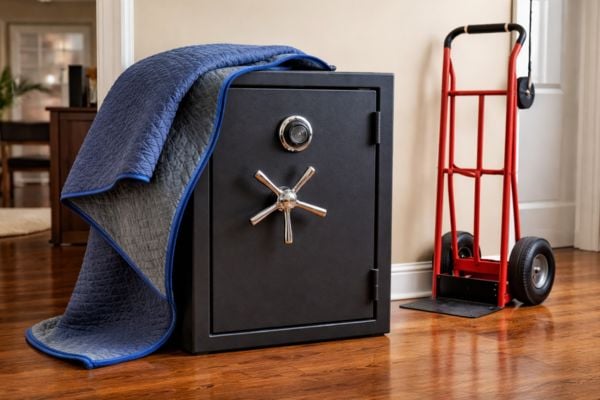

A heavy safe is one of those things you buy hoping you'll never have to move it. They're designed to stay put. Thick steel walls, fireproof insulation, reinforced doors, everything about a safe is built to resist being shifted. Which is great for security. Less great when you need to get it from one address to another.
A small home fire safe might weigh 30 or 40 kilos. A decent office safe can be 100 to 200kg. A large gun cabinet or commercial safe? Easily 300kg or more. And unlike a wardrobe or a sofa, you can't take a safe apart to make it lighter. What you see is what you're moving.
This guide covers the practical options for getting a heavy safe transported in the UK, how to prepare for it, and what to watch out for.
Need a heavy safe collected and delivered?
Get an instant quote for door-to-door safe transport across the UK.
Get a Quote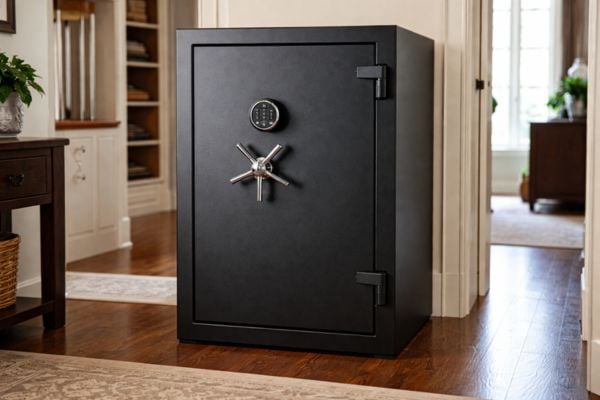
Built to stay put — which is exactly the problem when you need to move one
What Kind of Safe Are You Moving?
The weight and difficulty varies enormously depending on what type of safe you're dealing with. Here's a rough guide:
| Safe Type | Typical Weight | Common Scenario |
|---|---|---|
| Small fire safe | 15–40kg | Home documents, passports, cash |
| Home security safe | 40–100kg | Jewellery, valuables, small firearms |
| Gun cabinet (UK spec) | 30–80kg | Shotguns, rifles — must meet BS 7558 |
| Office / commercial safe | 100–300kg | Business cash, documents, data |
| Large commercial / vault safe | 300kg+ | High-value commercial use |
A small fire safe that sits on a shelf? You can probably manage that yourself with a bit of care. Anything over about 50kg and you're into territory where proper equipment and ideally an extra pair of hands become essential.
Why Safes Are Harder to Move Than They Look
Weight is the obvious challenge. But it's not just the weight — it's how that weight is distributed.
Safes are top-heavy. The door is the heaviest single component, and it's on the front. That makes them want to tip forward the moment you tilt them, which is exactly what happens when you try to get one onto a dolly or down a step. People underestimate this constantly, and it's how most safe-moving injuries happen.
They're also compact, which sounds like it should make them easier but actually makes them harder. All that weight is concentrated into a relatively small footprint, which means enormous pressure per square centimetre on whatever surface they're sitting on. Drag a 200kg safe across a wooden floor and you'll gouge it to pieces. Drop a corner onto tiles and they'll crack instantly.
Then there's the access problem. Safes are rarely sitting in the middle of an open room. They're in cupboards, in corners, against walls, in spare bedrooms upstairs. Getting a heavy safe out of a house usually involves tight turns, narrow hallways, and at least one flight of stairs — which is where things get properly dangerous.
Watch out: Never try to carry a heavy safe down stairs with just one other person. A 100kg safe on a staircase is a serious injury risk. If stairs are involved and the safe weighs more than about 50kg, this is a job for professionals with the right equipment.
How to Get a Heavy Safe Transported
Your options depend on the weight and how far it needs to go.
Large item courier service. For safes that don't require specialist lifting equipment (roughly under 150kg and on ground floor), a large item courier can collect and deliver door to door. The driver loads it into the van, transports it, and delivers to the destination. This works well for home fire safes, gun cabinets, and smaller commercial safes where access is straightforward.
Man and van with a two-person team. For heavier safes or situations where loading help is needed, a man and van service with two people and the right equipment (heavy-duty dolly, straps, floor protection) is usually the right call. Two experienced movers with a proper appliance dolly can handle most domestic safes safely.
Specialist safe movers. For anything over about 300kg, bolted to the floor, located upstairs, or requiring a stair-climbing dolly, you may need a company that specifically handles safe relocation. They'll have hydraulic dollies, stair climbers, and the experience to deal with the access challenges that make heavy safes so tricky.
Good to know: When getting a quote, always mention the safe's weight, which floor it's on, whether stairs are involved, and whether it's bolted down. These details affect the equipment needed and the number of people required. Missing any of them out can lead to a driver arriving and being unable to complete the job.
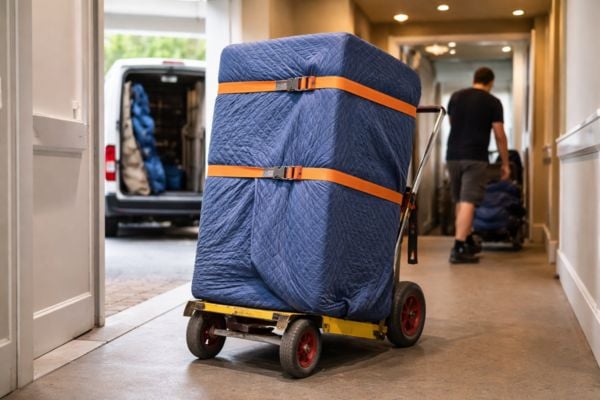
Moving blankets and a proper dolly are the bare minimum for anything over 50kg
Preparing a Safe for Transport
Empty it completely. Remove everything inside — documents, cash, jewellery, firearms, ammunition. This reduces weight and protects your valuables. Firearms and ammunition should always be transported separately from the safe, and in the case of firearms, in compliance with UK law.
Lock the door. Once empty, lock the safe door shut. An unsecured door swinging open during transport is a serious hazard. If the safe has a key lock, keep the key on your person rather than leaving it in the lock.
Wrap it. Moving blankets around the outside protect both the safe's finish and your walls and doorframes during transit. Tape them in place or use stretch wrap to hold everything secure.
Protect your floors. Lay down hardboard or thick cardboard along the route from the safe to the van. Even with a dolly, the concentrated weight can damage flooring. Carpet, tiles, and hardwood are all vulnerable.
Unbolt it if it's fixed down. Many safes are bolted to the floor or wall for security. These bolts need removing before any attempt to move the safe. Check if there are bolts underneath as well as at the back — some safes have both.
Tip: If you're moving a gun cabinet and you hold a firearms certificate, remember that your local police firearms licensing team may need to be notified of your change of address and the new location of the cabinet. This is a legal requirement, not optional.
Bought a Safe Second-Hand?
Safes hold their value well, and the second-hand market is active on eBay, Facebook Marketplace, and Gumtree. A quality safe that cost £500 to £1,000 new can often be found for a fraction of that price used. The catch, as always, is collection.
Nobody lists a 150kg safe with free delivery. They're almost always collection only, and the seller is rarely willing to help you get it out of their house and into a vehicle. That's your problem.
A marketplace collection and delivery service handles this. The driver collects from the seller's address and delivers to yours. For eBay collection only listings, the same process applies.
When buying a second-hand safe, always confirm the exact weight with the seller before booking a courier. Safe manufacturers list weights on their websites, and the model number is usually on a plate inside the door. Getting the weight right means the driver arrives with the right equipment and enough people to handle the job.
How Much Does It Cost to Transport a Safe?
The cost depends on three main things: the weight of the safe, the distance between collection and delivery addresses, and whether stairs or difficult access are involved.
A ground-floor-to-ground-floor move of a home fire safe over a short to medium distance is at the lower end. A 200kg office safe involving stairs at both ends and a cross-country route will be significantly more.
The quickest way to get an accurate price is to use an instant quote tool. Enter the postcodes, describe the safe (type, approximate weight, which floor it's on), and you'll see the cost straight away.
Frequently Asked Questions
Can I courier a heavy safe?
Yes. Safes up to around 150kg on ground floor with straightforward access can be handled by a large item courier service. Heavier safes or those involving stairs may need a two-person team or specialist safe movers.
How heavy is a typical home safe?
Small fire safes weigh 15–40kg. Home security safes are typically 40–100kg. Gun cabinets (UK spec) range from 30–80kg. Office and commercial safes can be 100–300kg or more.
Can I move a safe by myself?
Only if it's a small fire safe under about 30kg with no stairs involved. Anything heavier is a serious injury risk without proper equipment and help. Safes are top-heavy and tip easily.
What equipment is needed to move a heavy safe?
A heavy-duty appliance dolly, moving straps, thick moving blankets, floor protection (hardboard or heavy cardboard), and ideally at least two people. For stairs, a stair-climbing dolly is strongly recommended.
Do I need to notify anyone if I'm moving a gun cabinet?
Yes. If you hold a UK firearms certificate, you're legally required to notify your local police firearms licensing team of your change of address and the new storage location of your gun cabinet.
Can I get a safe collected from an eBay or Marketplace seller?
Yes. A marketplace collection and delivery service sends a driver to the seller's address to collect the safe and deliver it to you. Always confirm the exact weight with the seller beforehand so the driver arrives with the right equipment.
Ready to get your safe transported?
Instant quote. Door-to-door. Any weight, any distance.
Get a Quote