
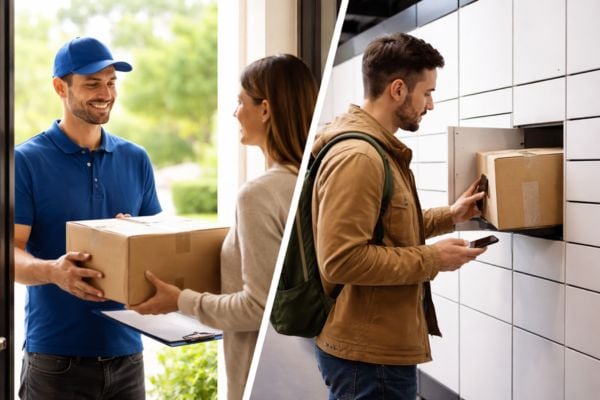

Sending a parcel shouldn't feel like a military operation, yet here we are. You've got something that needs moving, and now you're facing the age-old question: do you let a courier collect it from your doorstep, or do you schlep it to a depot yourself? Both have their moments, and both can be absolutely useless depending on what you're trying to achieve.
The answer isn't as straightforward as the courier companies would have you believe. A depot drop-off might save you a few quid on a birthday card, but it's a different story entirely when you're shifting a three-seater sofa you've just sold on Facebook Marketplace. Similarly, door-to-door collection sounds brilliant until you realise you're paying premium rates for something the size of a shoebox.
Let's cut through the sales pitch and work out which option actually makes sense for your situation.
What Door to Door Collection Actually Means
Door-to-door courier service is exactly what it sounds like, but the reality varies wildly between providers. At its core, a driver turns up at your address, collects whatever you're sending, and delivers it directly to the recipient's doorstep. No intermediaries, no depot visits, no queueing behind someone posting 47 Christmas cards in October.
The good services give you a proper time slot so you're not trapped indoors all day. The questionable ones promise "between 8am and 6pm" and turn up at 5:47pm when you've nipped out for milk. Most reputable door-to-door courier services these days offer one-hour windows and text updates, which is genuinely helpful rather than just marketing fluff.
What separates door-to-door from standard courier services is the direct nature of it. Your item doesn't go via three sorting hubs and a distribution centre in Milton Keynes. It gets collected, travels with that driver or gets handed off once, and arrives at its destination. Fewer touchpoints generally mean fewer opportunities for things to go sideways.
How Depot Collection Works in Practice
Depot collection means you do the legwork yourself. You pack your item, stick a label on it, drive to a depot or ParcelShop, hand it over, and off it goes into the courier network. The appeal is obvious: it's usually cheaper, you can drop off whenever suits you (within opening hours), and you don't need to wait around for a collection slot.
The UK is absolutely littered with drop-off points these days. Corner shops, petrol stations, supermarkets – there's probably one within ten minutes of wherever you're reading this. Some are open until 10pm, others keep Sunday hours, which gives you flexibility that home collection can't match.
But here's where it gets interesting. That "cheaper" depot option assumes your time is worthless and you've got a car. If you're lugging something heavy on the bus, or if the nearest depot is a 20-minute drive away, suddenly that £3 saving doesn't look quite so clever. The maths changes completely depending on what you're sending and where you live.
💡 Quick Tip
If you're sending multiple items in one go, depot drop-off pricing often works per item. Three parcels via depot drop-off could actually cost more than one door-to-door collection for all three together.
The Cost Question Everyone Actually Cares About
Let's talk money, because that's usually what tips the decision one way or the other. Depot drop-off is almost always cheaper on paper. You might pay £3.99 to drop a small parcel at your local shop versus £6.99 for home collection. Simple arithmetic says depot wins.
Except it's not that simple, is it? Factor in petrol, parking, and the fact you've just spent 40 minutes of your Saturday morning queuing behind someone who can't work out how QR codes work, and that £3 saving feels less impressive. Time is money, even if courier pricing doesn't account for yours.
The sweet spot for depot drop-off is small, light parcels sent occasionally. A birthday present, a returned jumper, documents that won't fit through a letterbox – these make sense to drop off yourself. The sweet spot for door-to-door is literally everything else: anything heavy, anything awkward, anything you're sending regularly, or anything that requires two people to lift.
When you're dealing with furniture or other large items, the pricing flips completely. Most depot services won't even accept a wardrobe, and the ones that do charge enough that you might as well have gone with a proper furniture courier service in the first place. You're not saving money wrestling a chest of drawers into your Fiesta, you're creating a problem.
When Door to Door Makes Perfect Sense
Door-to-door collection isn't just for people with more money than sense. There are plenty of scenarios where it's genuinely the smart choice, even if it costs a bit more upfront.
You're sending something bulky or heavy. This one's obvious but bears repeating. If you can't comfortably carry it to your car and then into a depot, door-to-door isn't a luxury – it's a necessity. Sofas, wardrobes, gym equipment, large parcels from eBay sales – these need proper collection with a van and ideally two people.
You don't have a car. Not everyone drives, and that's fine, but it does make depot drop-off significantly less appealing. Carrying a 10kg parcel on public transport while it's raining is nobody's idea of a good time. Door-to-door collection suddenly looks very reasonable when the alternative is three bus journeys.
You're running a business. If you're sending 20 parcels a week, spending two hours every Monday at the depot isn't efficiency – it's madness. The time saved with regular collections pays for itself almost immediately, particularly if you'd otherwise be paying staff to do depot runs.
You're in a rush. Many door-to-door services can collect same-day if you book early enough. Depots can't compete with that unless you happen to live next door to one. When something absolutely has to go today, collection wins every time.
You're selling on marketplaces. If you're regularly shifting furniture or large items on eBay, Gumtree, or Facebook, professional collection services designed for marketplace collection and delivery save enormous amounts of hassle. Buyers appreciate proper tracked delivery, you don't need to arrange vans, and everyone knows where they stand.
⚠️ Watch Out
Some "door-to-door" services are actually depot-based services with collection added on. Your item still goes through multiple hubs and sorting centres, which defeats half the point. Proper door-to-door should mean fewer handling points, not just convenient collection.
When Depot Drop-Off Actually Works Better
Depot drop-off isn't dead in the water. There are absolutely situations where it's the better choice, and pretending otherwise would be daft.
Small, light, occasional parcels. If you're sending a couple of items a month that fit in a carrier bag, depot drop-off is perfectly sensible. It's cheap, it's quick if you time it right, and most corner shops will have you in and out in under two minutes.
You pass a depot anyway. If there's a ParcelShop on your commute or next to your regular supermarket, the convenience factor shifts dramatically. Dropping something off while you're already out shopping costs you essentially nothing in time or effort.
You need absolute flexibility on timing. With door-to-door, you're beholden to collection slots. With depot drop-off, you can do it at 9pm on a Sunday if that's when you finally get round to it. Some people genuinely prefer that control, even if it means more physical effort.
You're sending returns. Most online retailers offer free returns via depot drop-off but charge for home collection. Unless the item is massive, it usually makes sense to just take it to the shop and be done with it.
Budget is genuinely tight. Sometimes the cheapest option is the only option that matters. If saving £4 per parcel is important to you, depot drop-off delivers on that. Just make sure you're accounting for all the hidden costs we talked about earlier.
The Middle Ground Nobody Talks About
Here's something most comparison articles won't tell you: you don't have to pick one forever. The smartest approach is using whichever makes sense for each individual shipment.
Send your book returns via depot drop-off on your way to Tesco. Get door-to-door collection when you sell that dining table on Facebook. Use depot for your eBay clothing sales but collection for the occasional larger item. There's no courier loyalty programme worth worrying about here.
The other middle ground is courier marketplaces that connect you with drivers who are already heading in your direction. These often work out cheaper than traditional door-to-door while still giving you collection service, particularly for larger items where depot simply isn't an option anyway.
What About Insurance and Tracking?
Both door-to-door and depot services typically offer similar insurance and tracking these days. Most include basic cover (usually £20-50) and the option to purchase additional protection for valuable items. Tracking is pretty much standard across the board now – even the budget depot services give you a barcode scan and delivery confirmation.
The difference is in what happens when things go wrong. With door-to-door, particularly from services specialising in larger items, you generally get better handling and fewer claim disputes. Your three-seater sofa isn't being thrown onto a conveyor belt with 400 shoeboxes. It's being loaded carefully by someone who does this for a living and knows a damaged sofa claim costs them more hassle than taking an extra two minutes at collection.
Depot services have more touchpoints, which statistically means more opportunities for damage or loss. That doesn't mean they're inherently worse – millions of parcels go through depot systems perfectly fine every day. But if you're sending something particularly valuable or fragile, the direct nature of door-to-door collection does reduce risk.
💡 Insurance Tip
Always photograph items before sending, regardless of which service you use. If you do need to claim, having timestamped photos of the item's condition pre-shipment makes the process significantly smoother.
Making Your Decision
So which should you choose? Here's the honest answer: it depends entirely on what you're sending, where you're sending it from, and what your time is worth.
If you're sending small parcels occasionally and you've got easy access to a depot, save yourself some money and drop them off. If you're sending anything heavy, awkward, valuable, or in quantity, pay for door-to-door collection and spend your Saturday doing literally anything else instead.
The worst choice is the one that sounds good in theory but falls apart in practice. Paying £50 for professional collection sounds expensive until you factor in two hours of your time, a tank of diesel, and a strained back from lifting a wardrobe into a Fiat Punto. Similarly, "saving money" with depot drop-off doesn't help if the depot closes at 5pm and you work until 6pm.
Stop thinking about it as door-to-door versus depot and start thinking about it as the right tool for the specific job. Use depot drop-off for the small stuff when it's convenient. Use door-to-door collection for everything else. And if someone tries to tell you there's one correct answer for every situation, they're either selling something or they've never actually sent a parcel before.