


You've won a lot at auction. Brilliant. The hammer came down, you got a price you're happy with, and the adrenaline is still buzzing. Then reality hits: you've got five working days to collect a mahogany sideboard from an auction house in Worcestershire and you live in Newcastle.
This is the bit that catches first-time auction buyers off guard. Most auction houses don't deliver. They'll hold your lot for a few days, sometimes a week, and then storage charges start stacking up. It's your responsibility to arrange collection, and if the item is large, heavy, or fragile, that's not as simple as turning up with a hatchback.
This guide covers how to arrange collection and delivery from auction houses across the UK, what to expect, and how to avoid the common mistakes that cost buyers time and money.
Won a lot at auction and need it collected?
Get an instant quote for auction house collection and delivery anywhere in the UK.
Get a Quote
Your lot is sitting here — the clock's ticking on collection
How Auction House Collection Works
Every auction house operates slightly differently, but the general process is consistent across the UK:
You win the lot and pay for it. Payment is usually required within 24 to 48 hours of the auction ending. Most houses accept bank transfer, card payment, or sometimes cash for smaller amounts. You'll also pay the buyer's premium on top of the hammer price, which is typically 20% to 25% plus VAT.
You arrange collection. The auction house gives you a window to collect, usually 5 working days. Some are more generous, some less. After the deadline, daily storage charges kick in, typically £5 to £10 per lot per day. These add up fast if you're slow to organise collection.
You or your courier collects the lot. You can collect in person, send a friend, or arrange a courier to collect on your behalf. Most auction houses are well used to dealing with third-party couriers and will have a collections desk or warehouse area set up for this.
Watch out: Most auction houses will not pack your item for you. Some have a recommended packing service on site, but many simply hand the lot to your courier as-is. If you're buying fragile items like glass, ceramics, or framed artwork, check with the auction house in advance whether packing is available or whether your courier needs to bring their own materials.
What Can You Buy at Auction That Needs a Courier?
Practically anything large, heavy, or valuable. The most common items that need courier collection from auction houses include:
Furniture. Dining tables, wardrobes, sideboards, chests of drawers, desks, bookcases. Auction houses are one of the best places to buy quality furniture at a fraction of retail price, but the pieces are often heavy, solid wood, and too large for a car. A furniture courier is usually the simplest option for these.
Antiques and collectables. Clocks, mirrors, paintings, sculptures, ceramics, silverware. These need careful handling and often specialist wrapping. Porta's art and antiques courier service covers dealers, collectors and auction buyers regularly.
Garden items. Stone statues, urns, benches, cast iron furniture. These are heavy, awkward, and rarely packaged.
Musical instruments. Pianos, grandfather clocks, large speakers. All oversized, all fragile, all requiring specialist transport.
White goods and appliances. Auction houses that handle house clearances often sell washing machines, fridges, and cookers. These are heavy but straightforward to courier.
How to Arrange a Courier for Auction Collection
The process is simpler than most people expect:
1. Get the lot details. You need the auction house address, the lot number, the item description (size, weight, how many pieces), and the collection deadline. Most of this is in your buyer's confirmation email.
2. Get a quote. Enter the auction house postcode as the collection address and your home postcode as the delivery address. Describe the item — what it is, approximate dimensions and weight. You'll get a price in seconds.
3. Book the collection. Once booked, let the auction house know that a courier will be collecting on your behalf. Give them the driver's name and the expected collection date. Most houses require at least 24 hours' notice for third-party collections.
4. The driver collects and delivers. The driver goes to the auction house, collects your lot, and delivers it to your door. For furniture and large items, the driver handles the loading and unloading.
Tip: If you've won multiple lots at the same auction, mention this when getting your quote. Combining several items into one collection is almost always cheaper than arranging separate pickups.
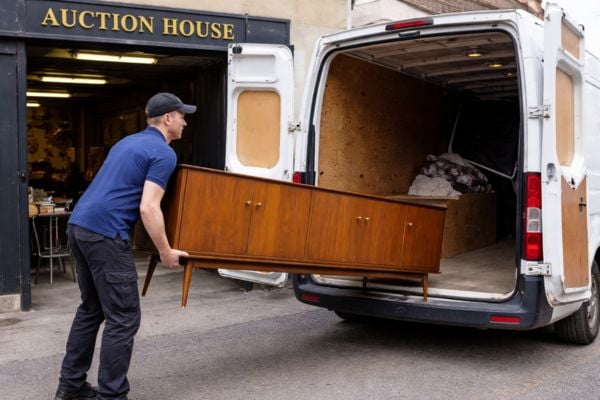
Door-to-door collection from the auction house straight to your home
Need a lot collected from an auction house?
Instant quote. Door-to-door from any UK auction house.
Get a QuoteWhat About Online Auctions?
Online auction platforms have exploded in the last few years. Sites like the-saleroom.com, easyliveauction.com, and i-bidder.com let you bid on lots at regional auction houses across the UK without being in the room. Brilliant for finding bargains. Less brilliant when you realise the lot you've won is 250 miles away and still needs collecting.
The collection process is identical to in-person auctions. You pay, you arrange collection, and the clock starts ticking. The only difference is that with online bidding, it's easier to forget that the item is physically sitting in a building somewhere and needs to be physically moved to your home.
eBay auctions work slightly differently because eBay has its own payment system. But for large items listed as collection only, the same challenge applies. An eBay collection service handles pickup from the seller's address and delivery to you.
For items won through general marketplace collection and delivery, whether from auction platforms, Facebook Marketplace, or private sales, the process is the same — driver collects, driver delivers.
Common Mistakes Auction Buyers Make
Not factoring delivery cost into the bid. A Georgian chest of drawers for £80 sounds like a steal until you add £120 for courier collection and delivery. Always check the delivery cost before you bid, not after you've won.
Missing the collection deadline. Storage charges accumulate daily and some auction houses will eventually re-sell uncollected lots. Book your courier as soon as you've won, not the day before the deadline.
Not checking access at the auction house. Some auction houses have loading bays and forklift access. Others have a narrow door and three steps. Let your courier know the situation so they can plan accordingly.
Assuming the auction house will pack the item. Most won't, or they'll charge extra for it. If your item is fragile, either arrange for the courier to bring packing materials or ask the auction house about their packing service before collection day.
Buying without seeing the item in person. Online auction photos can be misleading. Condition reports are helpful but not infallible. If you're spending serious money, consider viewing in person before bidding, or at least factor in the risk that the item might not be exactly as you imagined.
Good to know: Many auction houses have a list of recommended couriers pinned to their website. These tend to be specialist art and antiques shippers who charge premium rates. A general large item courier can often do the same job for less, especially for robust furniture that doesn't need specialist fine art handling.
How Much Does Auction Collection and Delivery Cost?
The cost depends on the item size and weight, the distance between the auction house and your address, and how quickly you need it. A single chair from an auction 30 miles away is a very different job from a dining table and six chairs coming 200 miles across the country.
The quickest way to find out is to get an instant quote. Enter the auction house postcode, your postcode, and describe the item. You'll see the price straight away rather than waiting days for email quotes from specialist shippers.
Frequently Asked Questions
Do auction houses deliver?
Most do not. The majority of UK auction houses require buyers to arrange their own collection, either in person or via a third-party courier. Some have recommended shippers on their website, but these tend to be specialist fine art companies with higher rates.
How long do I have to collect from an auction house?
Typically 5 working days, though this varies by auction house. After the deadline, daily storage charges usually apply. Check your buyer's confirmation for the exact terms.
Can I send a courier to collect from an auction house?
Yes. Most auction houses regularly deal with third-party couriers collecting on behalf of buyers. Let the auction house know in advance who will be collecting and on what date.
Will the auction house pack my item?
Most won't as standard. Some offer an in-house packing service for an additional fee, and some have a recommended packing company on site. Always check before collection day, especially for fragile items.
Should I factor delivery cost into my auction bids?
Absolutely. Check the approximate delivery cost before you bid so you know the true total cost of the lot. A bargain hammer price can quickly become less of a bargain once you add the buyer's premium, VAT, and delivery.
Can I combine multiple lots into one courier collection?
Yes, and it's usually much cheaper than arranging separate collections. Mention all your lots when getting a quote so the driver can collect everything in one visit.
Won something at auction? Get it delivered.
Instant quote. Collection from any UK auction house.
Get a Quote