
How To Move A Washing Machine
Moving a washing machine can be a daunting task, but with the right preparation and technique, it can be done efficiently and safely.
Whether you're relocating to a new home or simply rearranging your appliances, following the correct steps will help prevent damage to your washing machine and ensure a smooth transition.
In this guide, we'll explore the essential steps involved in moving a washing machine, including preparation, disconnection, lifting, transportation, and reinstallation.
Key Takeaways
If you are in a hurry, here's a summary of the key takeaways from this article:
- Ensure you have the necessary tools and materials for moving a washing machine.
- Disconnect the appliance carefully to avoid water leaks and electrical issues.
- Use a dolly and secure the machine properly when moving over longer distances
- For long-distance moves, understand how to secure the appliance in a vehicle.
- Reconnecting your washing machine involves checking for leaks and proper installation.
- Considering a removal company can often be the safest option for transportation.
- Investigate crowdsourced delivery companies like Porta Delivery are most likely to provide the lowest prices for transportation and the lowest produced emissions

What Do You Need To Move A Washing Machine?
Before you begin the process of moving your washing machine, gathering the right tools and materials is essential. Here is what you will need:
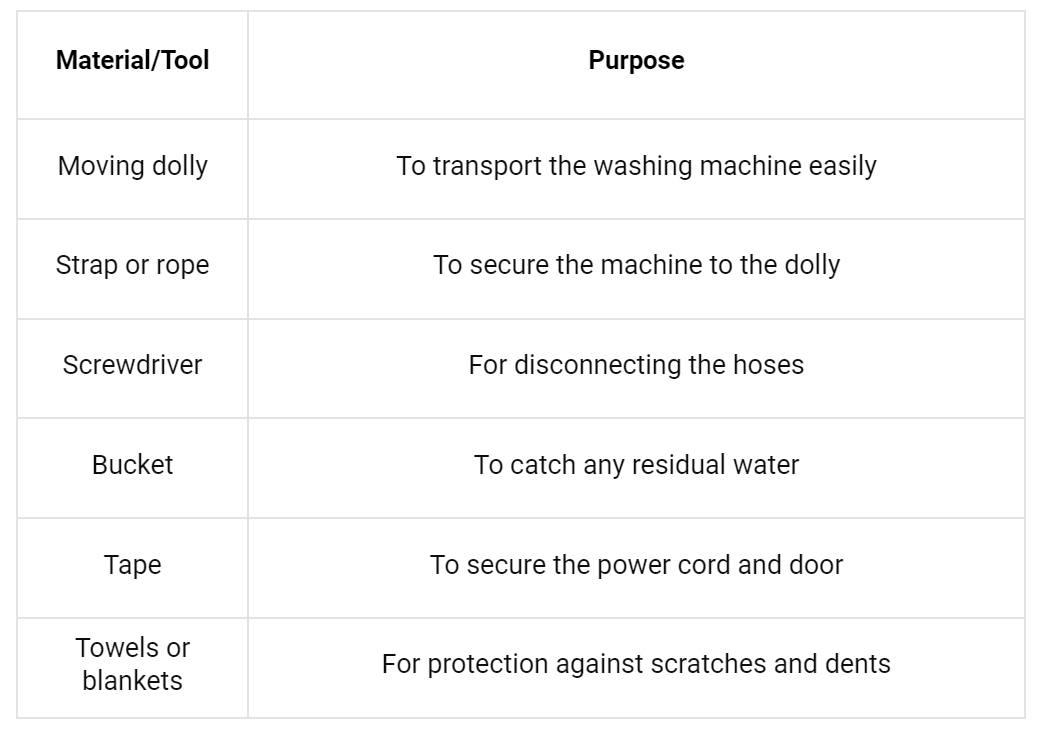

5 Tips To Remember When Moving Your Washing Machine
Moving a washing machine requires attention to detail to avoid damage. Keep these tips in mind:
- Always disconnect the power supply before starting.
- Clean and dry the interior thoroughly to prevent mould.
- Secure the drum with shipping bolts if available to prevent internal damage.
- Tape Up the door and any trailing cables that could cause accidents
- Measure doorways and paths before moving to ensure the washing machine can fit through easily.
Disconnecting A Washing Machine
Disconnecting your washing machine is the first step. Here's how to do it safely:
Shutting Off Water Supply
Turn off the water supply to the machine to prevent leaks. This is usually done via the valve controls behind the machine.
Detaching Hoses
Carefully disconnect the water supply hoses and the drain hose, using a screwdriver if necessary. Keep a bucket handy to catch any remaining water.
Preparing for Movement
Secure the power cord with tape and ensure the washing machine door is also taped shut. If your machine has them, insert the shipping bolts to protect the drum during transport.
Moving A Washing Machine Short Distances
For short distances, such as within the same home or building, a dolly is your best friend. Here’s the process:
- Lift the washing machine onto the dolly with help.
- Secure it using straps or rope.
- Slowly and carefully move the machine to its new location, avoiding any bumps or sharp turns.
Transporting A Washing Machine By Vehicle
Transporting a washing machine requires careful consideration to ensure it arrives at its destination safely and without damage. While you can opt to move the appliance yourself, hiring a professional delivery company can offer added convenience and peace of mind. Here's what you need to know about transportation and selecting the right delivery company for the job.
Considerations for Transportation
When transporting a washing machine, whether by yourself or with the assistance of a delivery company that moves appliances, several factors should be taken into account to ensure a smooth and successful move:
Vehicle Size: Ensure that the vehicle you use for transport is large enough to accommodate the washing machine securely. A van or truck with ample space and proper securing mechanisms is ideal.
Distance: Consider the distance you need to travel when planning the transportation of your washing machine. Longer distances may require additional precautions to secure the appliance properly and prevent damage during transit.
Road Conditions: Take into account the road conditions along your route, including any bumps, potholes, or rough terrain. These factors can affect the stability of the washing machine during transport and may require extra padding or securing measures.
Weather Conditions: Be mindful of weather conditions, such as rain or snow, that could potentially damage the washing machine during transport. If transporting during inclement weather, take steps to protect the appliance from moisture and ensure it remains secure.
Selecting a Delivery Company
When choosing a delivery company to transport your washing machine, it's essential to consider several factors to ensure reliable service and a positive experience:
Reputation: Research delivery companies in your area and check their reputation and customer reviews. Look for companies with positive feedback regarding their reliability, professionalism, and handling of fragile items like washing machines.
Experience: Choose a delivery company with experience in transporting large appliances like washing machines. Experienced movers will have the necessary equipment and expertise to handle the appliance safely and efficiently.
Insurance Coverage: Verify that the delivery company offers insurance coverage for transported items, including your washing machine. This ensures that you're protected in the event of any damage or loss during transit.
Cost: Compare the pricing and fees of different delivery companies to find one that offers competitive rates without compromising on service quality. Keep in mind that the cheapest option may not always be the best choice if it sacrifices reliability or safety.
Additional Services: Inquire about any additional services offered by the delivery company, such as installation or disposal of old appliances. Opting for a company that provides comprehensive services can save you time and hassle during the washing machine relocation process.
By carefully considering these factors and selecting a reputable delivery company, you can ensure that your washing machine is transported safely and efficiently to its new location, giving you peace of mind throughout the moving process.
Reconnecting A Washing Machine
Reconnecting your washing machine involves ensuring it is level, reconnecting the water supply, and checking for leaks. Here’s a step-by-step guide:
- Position the washing machine in its new spot.
- Reconnect the water supply hoses and drain hose, ensuring tight and secure connections.
- Level the washing machine to prevent excessive vibration.
- Test the machine for any leaks by running a short cycle.
Why Is It Safest To Go With A Removal Company?
Considering a removal company or a man with a van service might be the safest and most efficient way to move a washing machine, especially for long distances or if you’re unsure about doing it yourself. Here’s why:
- Professional handling ensures the washing machine is moved without damage.
- Insurance covers any accidental damage during transport.
- Equipment and expertise to handle the logistics of moving heavy appliances.

Videos for Further Insight
Moving a Washing Machine Safely in 7 Simple Steps. Watch it here.
Moving Your Washing Machine the Easy Way without Hurting Your Back. Watch it here.
How to Move Heavy Appliances Without Scratching the Floor. Watch it here.
How To Prepare Your Washing Machine for Moving or Shipping. Watch it here.
How To Move A Washing Machine: Frequently Asked Questions
Q. Can I lay my washing machine on its side to move it?
It’s generally not recommended to lay a washing machine on its side as it can damage the internals. Consult the manufacturer’s guidelines first.
Q. How do I secure the drum of my washing machine for moving?
Use shipping bolts provided by the manufacturer, if available, to secure the drum and prevent damage during transport.
Q. What should I do if my washing machine was stored in a cold place?
Allow it to reach room temperature before starting it to prevent any potential damage to the system.
Moving a washing machine can be a complex process, but with the right preparation and care, it can be done efficiently and safely. Whether moving it yourself or opting for a removal company, understanding the steps involved is key to a successful move.
Q. Can I move a washing machine by myself?
While it's possible to move a washing machine alone with the right equipment and technique, it's generally safer to enlist the help of a friend or professional mover to avoid injury or damage to the appliance.
Q. How much does it cost to hire professionals to move a washing machine?
The cost of hiring professionals to move a washing machine can vary depending on factors such as distance, difficulty of the move, and additional services required. On average, you can expect to pay between £50 to £150 for washing machine relocation services.
Q. Do I need to secure the drum inside the washing machine before moving it?
Yes, it's essential to secure the drum inside the washing machine to prevent it from shifting or becoming damaged during transport. Follow the manufacturer's guidelines for securing the drum properly.
By following these steps and precautions, you can safely and efficiently move your washing machine to its new location without any hassle or damage. Remember to take your time and enlist the help of others if needed to ensure a smooth and successful move.
Why Porta Delivery?
Porta Delivery use a crowdsourced driver model which matches you with furniture movers already planning the journey. Porta has three main benefits vs other companies:
1.) Lowest prices due to the crowdsourced model; drivers will have other items in their van, lowering the cost per item
2.) Neutral emissions as drivers are making the journey anyway
3.) Fast and easy to use platform
Why not get an instant price today